The Chairman of the Nigerian Ports Consultative Council (NPCC), Mr. Bolaji Sunmola, has called for swift and decisive action in...
NPCC Chairman Calls for Bold Implementation of Blue Economy Policy, Emphasizes Local Content and Infrastructure Reform
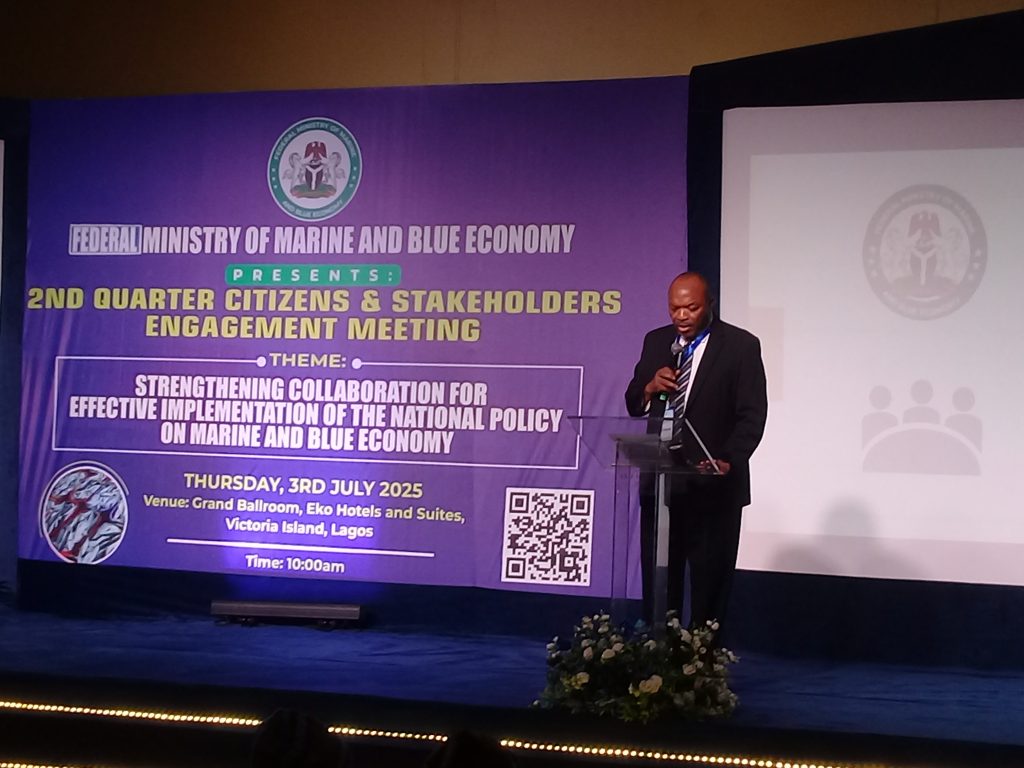
The Chairman of the Nigerian Ports Consultative Council (NPCC), Mr. Bolaji Sunmola, has called for swift and decisive action in the implementation of the newly approved National Policy on Marine and Blue Economy, describing the policy as a “transformative blueprint” for inclusive growth, job creation, and sustainable maritime development.
Mr. Sunmola made this charge while delivering his goodwill message at the Stakeholders’ Engagement Session on the Effective Implementation of the National Policy on Marine and Blue Economy, which held at the Grand Ballroom of Eko Hotels and Suites, Victoria Island, Lagos.
Representing the NPCC at the citizens/stakeholders engagement convened by the Ministry of Marine and Blue Economy, Mr. Sunmola emphasized that while the policy holds significant promise, its success will be measured by how effectively it is translated into “visible action, measurable outcomes, and prosperity for our people.”
“We are gathered not just to celebrate the approval of a visionary policy, but to chart a practical and urgent course for its successful implementation—particularly within our port sector, which remains the heartbeat of Nigeria’s marine and blue economy,” he remarked.
The NPCC Chairman outlined several critical focus areas for successful implementation, beginning with the urgent need to enforce local content in maritime operations. Citing an estimated annual loss of over nine billion dollars due to weak enforcement of the Cabotage Act, he stressed that indigenous companies must not only be present in port activities, but be strategically protected and empowered to lead.
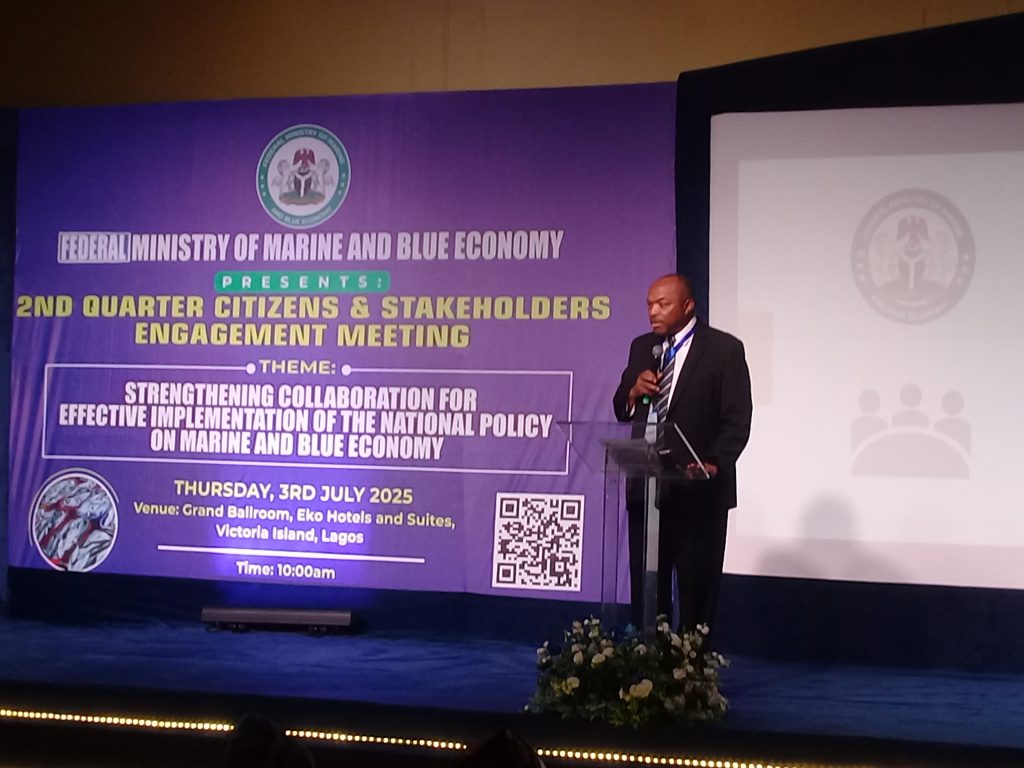
Another priority, Mr. Sunmola said, is the unacceptably high cargo dwell time in Nigerian ports—a persistent issue despite recent customs initiatives. He urged the government and private sector to accelerate digital reforms, deploy port community systems, and modernize clearance processes in order to align with global best practices and reduce trade costs.
“Every hour saved at our ports brings us closer to global competitiveness,” he noted.
On infrastructure, the Chairman advocated for modernization strategies that go beyond physical upgrades. He called for the development of smart, green, and accessible port infrastructure, as well as seamless multimodal connectivity via road, rail, and inland waterways to prevent the recurrence of previous congestion crises.
Investing in maritime human capital also featured prominently in his speech. He called on stakeholders to ensure that the policy translates into skills development, apprenticeships, and new career pathways for young Nigerians, dockworkers, and seafarers.
Additionally, Mr. Sunmola highlighted the importance of strengthening environmental standards across Nigerian ports. He emphasized the need to adopt global sustainability benchmarks, prevent pollution, and incorporate circular economy principles as part of port operations.
He also addressed the need to reform governance structures within the port sector. According to him, “duplication of agencies, overlapping mandates, and manual clearance processes must give way to a unified, efficient, and accountable system,” adding that government agencies must embrace a 24/7 digital single-window operation model.
Finally, he called for inclusion as a guiding principle, urging that youths and coastal communities be intentionally empowered through employment, entrepreneurship, and innovation initiatives within the blue economy.
Mr. Sunmola concluded his message with a firm call to action:
“The time for analysis is over. We now need execution. We propose that the Ministry inaugurates a Port-Sector Blue Economy Taskforce within 60 days and pilots these reforms across both Western and Eastern ports with quarterly reviews and transparent performance metrics.”
The Stakeholders’ Engagement Session was attended by senior government officials, port regulators, terminal operators, development partners, maritime workers, and other stakeholders from across Nigeria’s maritime industry.
The NPCC reaffirmed its commitment to supporting the Ministry and industry players in the practical rollout of the policy, positioning Nigeria as a resilient and competitive maritime nation in Africa.
Related Posts
NPCC Honours Council Secretary, Mr. Patrick Ezedimbu, at Retirement Reception
The Nigerian Ports Consultative Council (NPCC) on 30th June 2026 hosted a heartfelt retirement reception in honour of its Council...

NPCC Upcoming Programme: Two-Day Training on “Onshore/Offshore Ports Operations and Management” holds on the 7th-8th of July, 2026, at RockView Royale, Abuja.
Participation Fee / Per Person: N250,000 Bank: UBA Account Number: 1013334773 Account Holder: PORTS CONSULTATIVE COUNCIL Kindly make payment and...