At the recently concluded first quarterly meeting of the Nigerian Ports Consultative Council (NPCC), held on April 10, 2026, at...
NRC MD, Dr. Kayode Opeifa, Advocates Robust Port–Rail Integration at NPCC Quarterly Meeting
At the recently concluded first quarterly meeting of the Nigerian Ports Consultative Council (NPCC), held on April 10, 2026, at the Federal Palace Hotel, the Managing Director of the Nigerian Railway Corporation (NRC), Dr. Kayode Opeifa, delivered a far-reaching keynote address centered on the strategic imperative of integrating Nigeria’s rail system with its port infrastructure.
His presentation provided both a candid diagnosis of longstanding logistics inefficiencies and a forward-looking roadmap for unlocking economic growth through multimodal transport optimization.
Dr. Opeifa began by underscoring a critical but often underappreciated reality: no matter the scale of production—whether in manufacturing, agriculture, or extractive industries—economic value cannot be realized without an efficient logistics system.
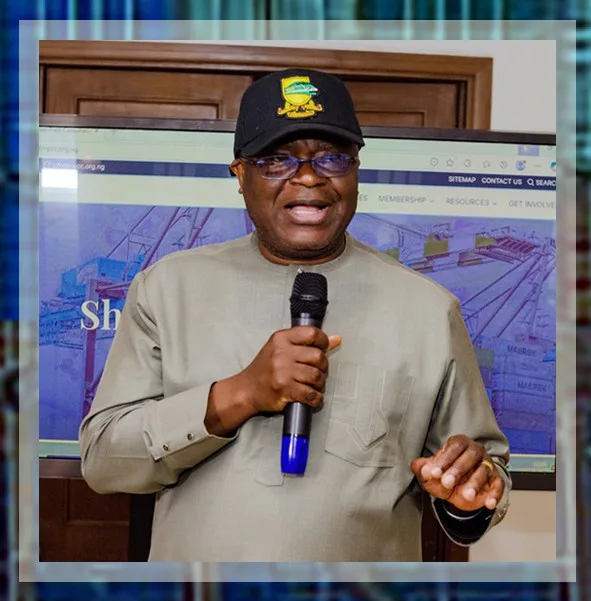
He noted that Nigeria’s logistics ecosystem remains insufficiently structured, with fragmented coordination across transport modes. According to him, this systemic gap has constrained the seamless evacuation of cargo from production centers to ports, as well as distribution from ports to inland markets.
In his words, failure to fix the logistics architecture would continue to undermine gains in other sectors, regardless of investments in power, industry, or trade.
A major highlight of the keynote was the emphasis on port–rail integration as a cornerstone for national economic transformation. Dr. Opeifa pointed to ongoing Federal Government efforts to accelerate rail connectivity to major ports, describing such initiatives as essential for reducing logistics costs, decongesting port corridors, and improving cargo throughput.
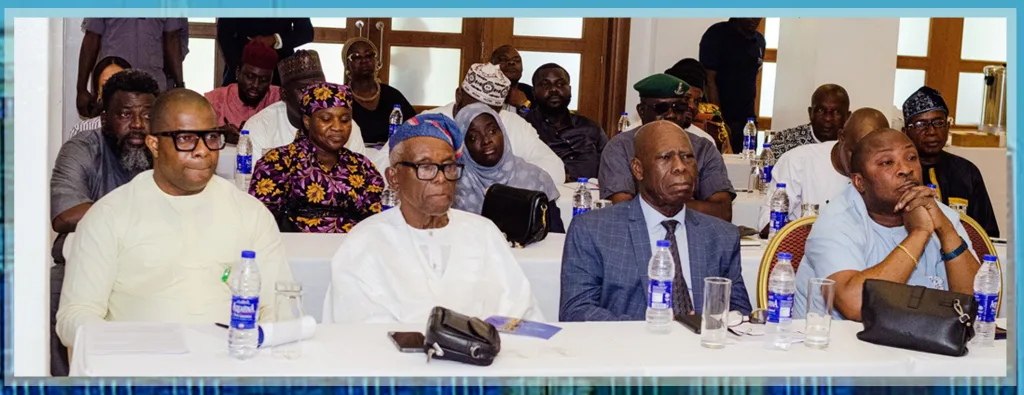
He explained that Nigeria’s historical rail infrastructure—particularly legacy narrow-gauge lines—was originally designed to facilitate cargo movement between hinterlands and coastal ports. However, decades of underinvestment and policy discontinuity led to a breakdown of these linkages.
Today, the renewed focus is on optimizing existing rail assets while expanding standard gauge connections directly into port terminals, especially within the Lagos port corridor, which remains the commercial nerve center of the country.
Dr. Opeifa highlighted ongoing efforts to rehabilitate and reposition critical rail lines linking key economic zones. He stressed that restoring connectivity between Lagos ports and inland destinations such as Ibadan, Kaduna, and Kano would significantly enhance cargo mobility across the country.
He also referenced plans to extend rail links between major port clusters—such as Apapa and Tin Can—as well as similar integration efforts for eastern port corridors, including Port Harcourt and Onne. These developments are expected to create a more balanced and nationally integrated port system.
Importantly, he challenged prevailing misconceptions about obsolete rail assets, noting that many so-called “scrap” materials are in fact strategic national infrastructure that can be rehabilitated and redeployed for immediate operational gains.
Addressing concerns within the logistics ecosystem, Dr. Opeifa clarified that the push for rail freight is not intended to displace road transport, but rather to complement it. He described the envisioned system as a multimodal framework, where rail handles bulk and long-haul cargo while trucks provide last-mile distribution.
Such an approach, he explained, would reduce pressure on road networks, lower transportation costs, and improve overall supply chain efficiency.
The NRC Managing Director also used the platform to highlight practical challenges currently affecting cargo movement, including:
- Limited availability of functional freight wagons
- Inefficiencies in container return logistics
- Double handling and additional charges imposed within terminal operations
- Emerging conflicts of interest where terminal operators also participate in inland logistics
He assured stakeholders that the Corporation is actively working to address these issues, including increasing freight handling capacity and developing inland container depots and freight terminals along rail corridors.
Dr. Opeifa further disclosed that the Federal Government has constituted a high-level committee to accelerate nationwide port–rail connectivity. The committee is expected to deliver actionable recommendations that will guide implementation and policy alignment across relevant agencies.
He expressed optimism that, with sustained political will and stakeholder collaboration, Nigeria could achieve within a few years what had remained unrealized for decades—namely, a fully functional, integrated port–rail logistics network.
In closing, Dr. Opeifa called on industry stakeholders—including port authorities, terminal operators, freight forwarders, and regulators—to actively support and leverage rail integration initiatives. He emphasized that the success of these reforms depends not only on government intervention but also on collective industry buy-in.
His keynote resonated strongly with participants, reinforcing the central message that efficient logistics—anchored on strong port–rail connectivity—is indispensable to Nigeria’s trade competitiveness and economic growth.
Related Posts
Nigerian Ports Consultative Council Holds Strategic Quarterly Meeting at FOT, Onne Port
Ololuka, Traffic Manager Abolade Task Stakeholders to Embrace Federal Government’s E-Call-Up, National Single Window Initiatives The Nigerian Ports Consultative Council...
NPCC Honours Council Secretary, Mr. Patrick Ezedimbu, at Retirement Reception
The Nigerian Ports Consultative Council (NPCC) on 30th June 2026 hosted a heartfelt retirement reception in honour of its Council...